













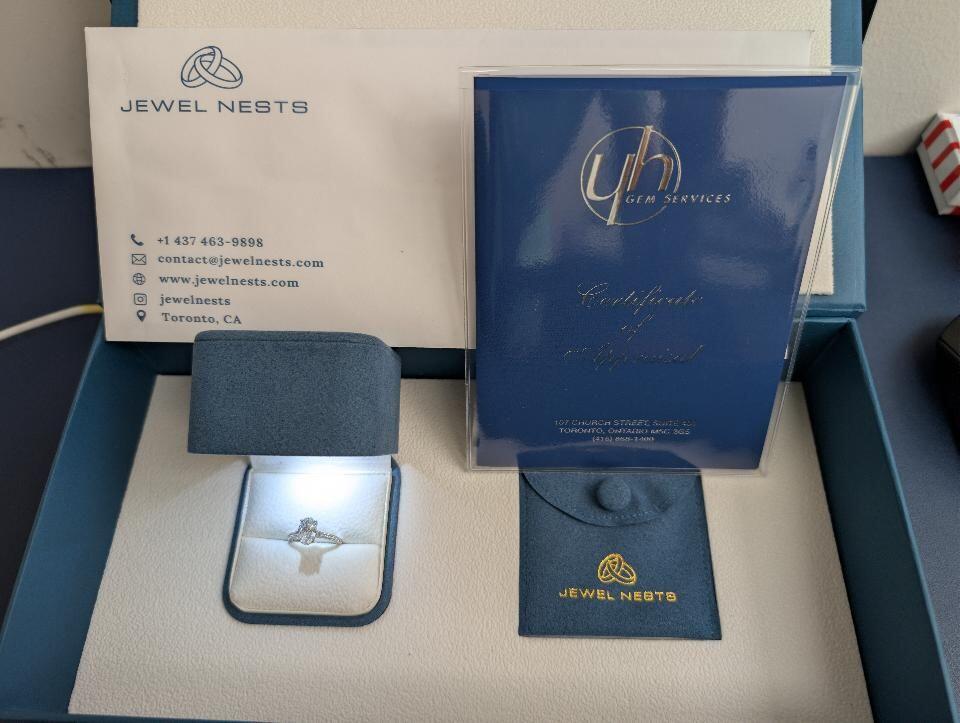
The appraisal certificate was detailed, professional, and gave me complete confidence in my purchase. It's reassuring to have clear documentation of the diamond's quality and value. A great addition to the overall experience.
I ordered a 1.5-carat engagement ring for my wife, and I couldn't be happier with the experience.
At first, I was hesitant, but I scheduled an appointment with James through the website. He took the time to explain their services, answered all of my questions, and helped me create the exact ring I had in mind.
The quality is outstanding, and the price is excellent. I couldn't find anything comparable on the market.
I was completely satisfied with every aspect of the experience, from the customer service to the final product.
I highly recommend JewelsNest, and I will definitely purchase from them again!
Wonderful buying experience overall.
My first experience with Jewel Nests exceeded my expectations. I'll definitely be shopping here again!
Worth every single penny spent.
The perfect balance of vintage gemstone shape and ultra-modern setting. It sparkles beautifully in the sunlight. Incredible value for this level of quality.
Elegant, timeless, and beautifully made.
If you like clean lines and modern design, this is the one.
Fast shipping, stunning packaging, and a ring that honestly makes me stop and stare at my hand every single day. 10/10.
The sparkle is unreal. Pictures really don't do it justice. It catches the light beautifully in every setting.
Buying diamond jewelry online made me nervous. I found Jewel Nests on Instagram after one of their videos appeared on my feed. Their website was easy to browse, but I still had concerns about quality and certification. I emailed them late in the evening expecting a reply the next day, but they responded much sooner than I expected and explained everything about the IGI certificate, gold purity, and the differences between push backs and screw backs. That level of transparency convinced me to place the order. The earrings arrived exactly as promised, and they're honestly even more beautiful than the photos.
I wasn't sure about the right ratio for a marquise, so I had a quick chat with the team. They were so helpful in explaining the different cuts and helping me visualize the final set. They actually sent me a few stone options to choose from! That kind of service is unheard of at big jewelry stores. It made the entire experience feel so special and personal.
I feel like I got a high-end designer experience without the massive designer markup. The stones are bright, the metal is smooth, and the customer service is as good as it gets. Buying such a significant piece of jewelry online is daunting, but the team at JewelNests made me feel completely at ease throughout the process.
If you’re on the fence, just get it. You won’t regret it!
Even though I ordered online, the experience felt personal. Every question was answered thoughtfully, and I never felt like just another customer. When my earrings arrived, I could immediately see the care that went into making them.
You can see the craftsmanship in every corner of this ring. The setting, finishing, and small details show that a lot of care went into making it.
I loved the look of it online, but seeing it in person is a whole other experience. The quality is just stunning.
After placing my order, I received updates during every stage of production and shipping. Whenever I had a question, someone responded quickly and politely. It made buying expensive jewelry online much less stressful. The earrings themselves are gorgeous and beautifully made.
The ring feels luxurious, but the experience was warm and personal. I never felt like just another customer. That made the purchase even more meaningful.
Fast shipping down under! The ring is even more gorgeous in person. The sleek bezel setting suits my active lifestyle perfectly while still looking incredibly chic.
It has that perfect "quiet luxury" look. I get compliments on it daily.
Loved the earrings so much that I’m already browsing other pieces from Jewel Nests. Great quality and beautiful designs.
Sometimes simple designs are the hardest to get right. These are elegant, balanced, and beautifully made.